

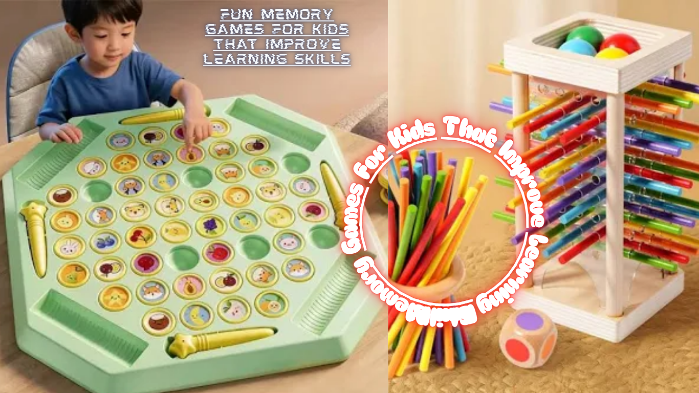
Fun Memory Games for Kids That Improve Learning Skills
Think about the last time your child forgot where they left their shoes, or struggled to remember a spelling word they practised the night before. It happens in every home. Memory isn’t something kids are simply born with or without. It’s a skill, and like any skill, it gets stronger with practice.
The best part is that practice doesn’t have to look like homework. A simple game of matching cards or a silly round of “what’s missing?” can train the same mental muscles that kids use in the classroom every day. In this article, we’ll look at why memory matters for learning, and share twelve fun games you can start playing today, most of them with almost no preparation.
Why Memory Matters So Much for Learning
When a teacher explains a new idea, a child has to hold that information in their head long enough to understand it, connect it to something they already know, and then recall it later. That chain involves a few different kinds of memory.
Short-term memory is the quick notepad of the brain. It helps kids remember a phone number for a few seconds or follow a three-step instruction like “put your bag down, wash your hands, then come to the table.”
Working memory is a little more active. It holds information while the child does something with it, such as solving a maths problem in their head or remembering the start of a sentence while they write the end.
Long-term memory stores things for days, months and years, like multiplication tables, the faces of friends or the way to the park.
Games can support all three. They also build focus, patience and confidence, which are just as important as memory itself. A child who feels “I can remember things” is usually more willing to try harder tasks at school.
One honest note before we begin: games won’t magically turn a child into a genius, and no single activity works for everyone. But regular, enjoyable practice does help kids get better at the specific skills they’re playing with, and it makes learning feel less scary.
12 Fun Memory Games for Kids
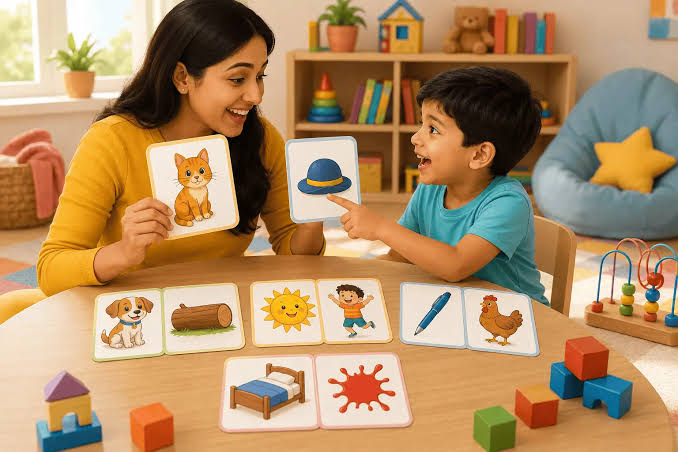
1. Classic Card Matching
This is the one almost everybody knows. Lay out pairs of cards face down, and take turns flipping two at a time to find a match. If they match, you keep them. If not, you turn them back over and try to remember where they were.
For toddlers, start with just three or four pairs. Older kids can handle twenty or more. You can buy a ready-made set, or make your own with index cards and simple drawings. Homemade cards have a bonus: kids love playing with pictures they drew themselves.
2. What’s Missing?
Place five to ten small objects on a tray, such as a spoon, a toy car, a pencil and a sock. Let your child look at them for thirty seconds, then ask them to close their eyes. Take one item away, and ask, “What’s missing?”
This game is wonderful for observation and attention to detail. To make it harder, remove two items, shorten the viewing time, or let your child be the one who hides things and tests you. Kids adore catching their parents out.
3. I Packed My Bag
This one works anywhere, including a car ride or a waiting room. The first player says, “I packed my bag, and in it I put an apple.” The next player repeats that and adds something new: “I packed my bag, and in it I put an apple and a book.” The list keeps growing until someone forgets an item.
It builds listening skills, sequencing and verbal memory. Younger children can try an easier version where you all say the list together, then slowly start dropping the help.
4. Simon Says, Memory Edition
Regular Simon Says is already a good listening game. For a memory twist, give a string of actions at once: “Simon says touch your nose, clap twice, then spin around.” Your child has to do them in the right order.
Begin with two steps and slowly build up. This game is great for following multi-step instructions, which is something many teachers wish kids were better at.
5. Pattern Copy with Blocks or Beads
Build a short pattern using coloured blocks, beads or LEGO bricks, such as red, blue, blue, yellow. Show it for ten seconds, then cover it up. Your child tries to recreate the same pattern from memory.
This trains visual memory and attention to order. As your child improves, add more pieces or include different shapes. It’s also a gentle way to introduce early maths ideas like patterns and sequences.
6. Story Chain
One person begins a story with a single sentence, like “A little frog found a golden key.” The next person repeats that sentence and adds a new one. Each turn, the group retells the whole story from the beginning before adding more.
By the end, you’ll have a funny, silly story, and everyone will have practised remembering details in the right order. It’s perfect for kids who love imagination, and it supports language and storytelling skills too.
7. Kim’s Game (With a Cloth)
This is a slightly more dramatic version of “What’s missing?” Put a handful of objects under a cloth. Lift it for fifteen seconds, then cover it again. The challenge is for the kids to write or say as many items as they can remember.
It’s a good fit for classrooms and birthday parties because several children can play at once. Give small prizes for the most items remembered, or make it a team game so nobody feels left out.
8. Memory Walk
Take a short walk around the house, garden or neighbourhood, and ask your child to notice everything they can. When you get back, ask questions: “How many red doors did we see?” “What was the dog doing?” “What colour was the car outside the shop?”
This turns an ordinary walk into a mini mission. It builds observation and everyday recall, and it gets kids moving and breathing fresh air, which is good for learning in its own way.
9. Number and Word Echo
Say a short string of numbers or words, like “7, 2, 9,” and ask your child to repeat them back. Slowly make the list longer. You can also ask them to say the numbers backwards, which is more of a workout for working memory.
Keep it light and playful. If your child gets stressed, shorten the list and celebrate small wins. This is a good game for ages 6 and up, and it works well as a quick five-minute warm-up before homework.
10. Online Memory and Matching Games
Digital memory games can be a handy option, especially on days when you’re short on time. Many free educational sites offer picture-matching, sequence-repeating and spot-the-difference games, usually with colourful characters kids enjoy.
A few tips: choose games without lots of pop-up ads, check that the difficulty suits your child’s age, and set a time limit of twenty to thirty minutes. Screens are best used alongside, not instead of, hands-on play.
11. Spot the Difference
Show your child two nearly identical pictures and ask them to find what has changed. You can use printed puzzles, picture books or even photos from your phone. For a memory challenge, show one picture for a few seconds, hide it, then show the second and ask what’s different.
This sharpens visual attention and helps kids notice small details, a skill that comes in handy in reading, maths and science.
12. Teach Me Back
This one is simple but powerful. After your child learns something new, such as a science fact or a few vocabulary words, ask them to “teach it back” to you or a favourite stuffed toy. Explaining something in their own words helps the information stick.
It’s not a flashy game, but it builds long-term memory and understanding at the same time. Plus, kids love playing the teacher.
Matching Games to Your Child’s Age
Every child develops at their own pace, so treat these as rough guides rather than strict rules.
Ages 2 to 4: Simple card matching with a few pairs, “What’s missing?” with three objects, and songs or rhymes with actions.
Ages 5 to 7: Longer card sets, I Packed My Bag, pattern copying and Simon Says with two or three steps.
Ages 8 to 10: Kim’s Game, Story Chain, number echoes, and harder online memory challenges.
Ages 11 and up: Backwards number games, memory walks with detailed questions and “teach me back” sessions on school subjects.
Tips to Make Memory Games Work Better
Keep it fun, not stressful. The moment a game feels like a test, kids lose interest. Laugh at mistakes, and cheer for effort as well as success.
Increase difficulty slowly. If a game is too easy, your child gets bored. If it’s too hard, they feel defeated. Aim for the sweet spot where they have to think, but can still win sometimes.
Play a little every day. Ten minutes of play most days usually does more than one long session on the weekend.
Join in yourself. Kids love playing with adults, and your involvement shows them that learning is something enjoyable, not just a chore.
Link games to real learning. Use spelling words as your matching pairs, or turn multiplication facts into a card game. This makes the practice feel useful and natural.
Don’t forget sleep and snacks. A tired or hungry child will struggle with memory no matter how good the game is. Good sleep and regular meals matter more than most people realise.
Common Mistakes to Avoid
One common mistake is comparing your child to a sibling or classmate. Memory skills grow at different speeds, and pressure only makes things harder. Another is jumping in with the answer too quickly. Give your child a moment to think, even if it feels like a long pause.
It’s also easy to rely too much on screens because they’re convenient. Digital games are fine in moderation, but real objects, conversations and movement offer something screens can’t fully replace.
Finally, if your child consistently struggles with memory or attention in a way that worries you, it’s a good idea to talk to their teacher or doctor. Games are helpful, but they aren’t a replacement for professional advice when it’s needed.
Final Thoughts
Strong memory skills help children follow lessons, enjoy reading, solve problems and feel more confident at school. The wonderful thing is that building those skills doesn’t need expensive toys or special training. A deck of homemade cards, a tray of random objects or a silly story told around the dinner table can do the job beautifully.