

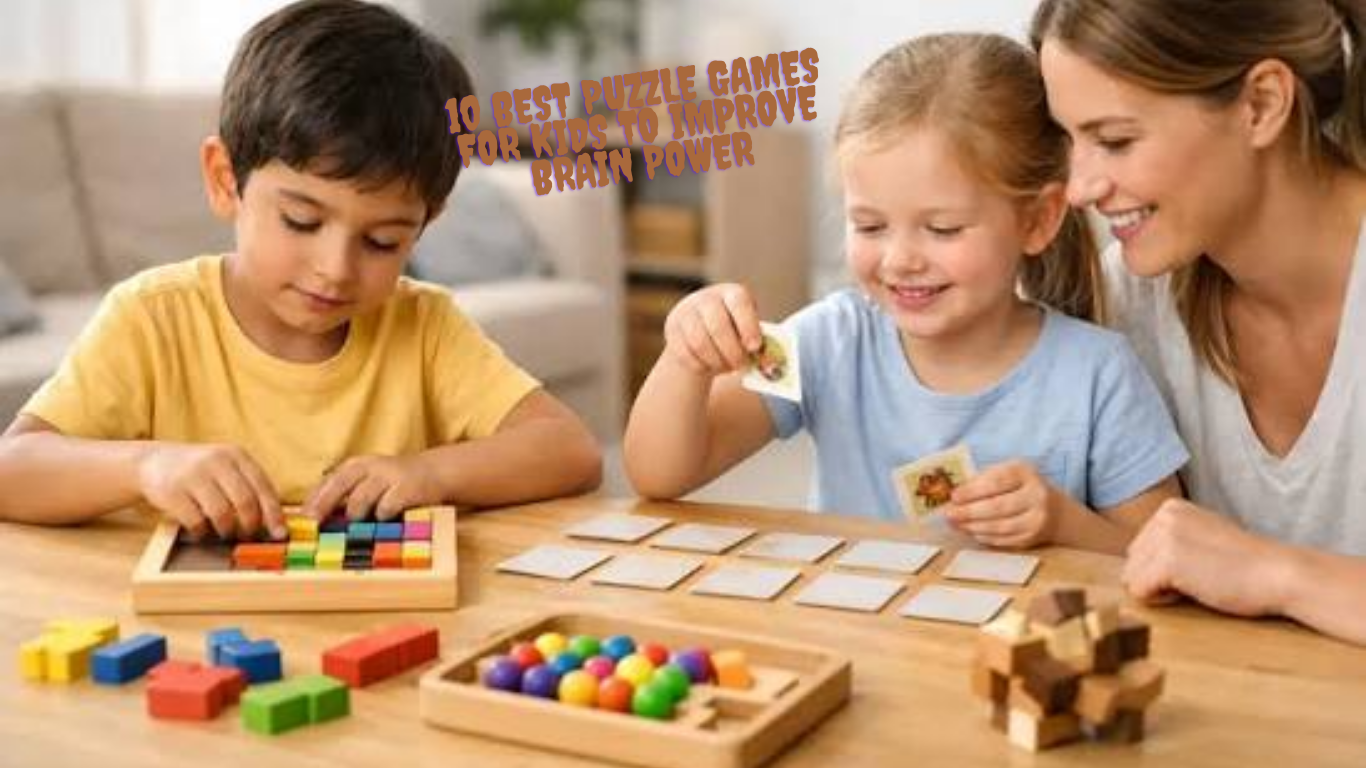
10 Best Puzzle Games for Kids to Improve Brain Power
Every parent has seen it. You hand your child a puzzle, they groan for two minutes, and then an hour later they’re still sitting there, tongue out, refusing to let you touch a single piece. That’s the magic of a good puzzle. It doesn’t feel like learning, but it quietly gives young minds a workout in patience, logic, memory and problem solving.
Here are ten puzzle games that kids actually enjoy, and that give their brains something useful to chew on.
1. Jigsaw Puzzles
The classic for a reason. Jigsaws teach kids to spot patterns, match shapes and think about how small parts fit into a bigger picture. Toddlers can start with chunky 4 to 12 piece wooden puzzles, and by age 8 or 9 many kids happily take on 200 to 500 pieces.
2. Tangrams
Seven simple shapes, endless pictures. Kids try to arrange the pieces into a cat, a house or a rocket, and along the way they pick up spatial thinking without even noticing. It’s cheap, it fits in a bag, and it works well from around age 5.
3. Sudoku for Kids
Don’t worry, there are 4×4 and 6×6 versions made for beginners, often using pictures instead of numbers. Sudoku builds logical thinking and teaches children that every problem has a step-by-step way through it. Ages 6 and up usually do well.
4. Rubik’s Cube
It looks scary, but there are plenty of beginner tutorials online. Solving the cube takes patience, memory and a willingness to fail a few dozen times, which is honestly a great life lesson. Most kids get interested around age 8 or later.
5. Rush Hour
This sliding-car board game is a favourite in many classrooms. Kids move vehicles around a traffic jam to free the red car, and the challenge cards go from easy to really tricky. It teaches planning ahead, which is a skill that matters far beyond games.
6. Tetris and Block Puzzles
Falling blocks might seem like pure fun, and they are, but they also train quick decisions and spatial awareness. Just keep an eye on screen time, as these games are easy to get lost in. Ages 7 and up is a good starting point.
7. Memory Match Games
Flip two cards, find a pair. Simple, and perfect for younger children. Memory games help kids practise focus and recall, and you can play the physical card version or one of the many free app versions. Even four-year-olds can join in with a small set of cards.
8. Word Search and Crossword Puzzles
These are great for kids who love reading. Word searches help with spelling and letter recognition, while kid-friendly crosswords stretch vocabulary and clue thinking. Ideal for ages 6 to 12.
9. Mastermind (Code-Breaking Games)
One player sets a secret colour code and the other tries to crack it using clues. It’s a smart way to teach deduction and “what if” thinking. Older kids, roughly 8 and up, tend to enjoy it the most, and it’s a good game to play together as a family.
10. Monument Valley and Cut the Rope
If your child enjoys tablets, these are two well-loved puzzle apps. Monument Valley bends architecture and perspective in beautiful ways, and Cut the Rope turns physics into a fun challenge. Both are best for ages 8 and up, and both are worth previewing yourself first, as some levels can be hard.
A Few Tips Before You Start
- Match the puzzle to the age. Too easy is boring, too hard feels like a punishment. Aim for slightly challenging.
- Don’t rush in with the answer. Let your child struggle a little. That’s where most of the learning happens.
- Mix screen and non-screen games. Physical puzzles and apps both have their place, so keep a healthy balance.
- Play together sometimes. A puzzle is better when someone cheers when you finally find that last piece.
Final Thoughts
You don’t need expensive toys or fancy gadgets to help your child think sharper. A simple puzzle, a bit of time and some encouragement go a long way. Pick one or two games from this list, try them this weekend and see which one your child falls in love with. Chances are, you’ll end up hooked as well.