

Best Logic Games for Kids to Develop Problem-Solving Skills
Watch a child get stuck on a puzzle and you’ll see something interesting. First comes the frown. Then the sigh. Then, if they’re given enough time, the quiet moment when they try something different, and suddenly it clicks. That small moment is exactly what logic games are built to create.
Problem solving isn’t only a school skill. It’s what helps a child figure out how to fix a broken toy, settle an argument with a friend, or work out a tricky maths question without panicking. Logic games let kids practise this kind of thinking in a safe, playful way, where a wrong move costs nothing and trying again is part of the fun.
In this guide, we’ll look at what logic games actually teach, and then go through twelve of the best options for different ages, including board games, paper puzzles and a few ideas you can try with nothing but a pencil.
What Do Logic Games Teach Children?
Logic games aren’t just about getting the right answer. While playing, kids quietly build a whole set of skills:
Reasoning. They learn to think, “If I do this, then that will happen.” This kind of cause-and-effect thinking is the foundation of problem solving.
Planning ahead. Many logic games reward kids who think two or three moves in advance instead of rushing.
Patience and persistence. Real puzzles don’t solve themselves in ten seconds. Kids learn to keep going when things get difficult.
Flexible thinking. When one approach fails, they have to try another. That’s a very useful habit for life.
Pattern recognition. Spotting what repeats, what changes and what doesn’t is at the heart of maths, coding and science.
Handling mistakes. In a good logic game, a mistake is just information. Kids learn that being wrong isn’t the end of the world.
None of this happens overnight, and no single game does everything. But with regular play, many parents and teachers notice that children become more willing to stick with a challenge.
12 Great Logic Games for Kids
1. Sudoku (Kid-Friendly Versions)
Sudoku has a reputation for being an adult puzzle, but there are versions designed for children. The 4×4 grids use only the numbers one to four, and some versions use pictures or colours instead of numbers.
The goal is simple: every row, column and box must contain each symbol once. Kids learn to eliminate possibilities and think step by step. Ages 6 and up usually enjoy the smaller grids, and older kids can graduate to 6×6 and then the full 9×9 puzzle.
2. Rush Hour
Rush Hour is a sliding-car puzzle where a traffic jam blocks the red car from leaving. Kids have to move the other vehicles, one at a time, to clear a path. Challenge cards range from easy to very tough.
It’s a great game for planning ahead, because one careless move can trap you. Many kids around 8 and older find it completely addictive, and it’s a nice solo activity for quiet afternoons.
3. Chess
Chess is often called the ultimate thinking game, and for good reason. It teaches planning, strategy, patience and thinking about what the other player might do next.
Don’t be put off if you don’t play yourself. Younger kids can start with simple lessons about how each piece moves, and many children enjoy playing small “mini games” with only a few pieces on the board. Ages 6 and 7 can begin the basics, and kids can keep growing with the game for years.
4. Tangrams
A tangram is a set of seven flat shapes that fit together to form a square. The challenge is to rearrange them into pictures, like a cat, a boat or a person running.
Tangrams build spatial reasoning and teach kids to look at shapes in different ways. They’re cheap, portable and a good fit for children from about age 5. You can even cut a set out of card at home.
5. Mastermind
One player chooses a secret code made of coloured pegs, and the other tries to guess it. After each guess, they get small clues about how close they were.
It’s an excellent game for deduction. Kids have to use each clue to narrow down the possibilities, which is real logical thinking. Most children around 8 and up can enjoy it, and it works nicely as a two-player game with a parent or sibling.
6. Logic Grid Puzzles
You may have seen these in puzzle books. A short story gives clues like “Anna doesn’t own the dog, and the boy with the red hat lives next door.” Kids fill in a grid to work out who owns what.
They sound tough, but there are plenty of beginner-level ones written for children. These puzzles strengthen careful reading and the ability to combine several clues at once. They suit ages 9 and up, though younger kids can try them with some help.
7. Maze Puzzles
Mazes are one of the simplest logic activities, and one of the most underrated. Kids trace a path from start to finish, and often have to retreat from dead ends and try another route.
Little ones from age 3 or 4 can enjoy easy mazes, while older kids can try bigger ones, or even design their own for friends to solve. Creating a maze is actually harder than solving one, which makes it a great challenge.
8. Block Building and Construction Challenges
LEGO, wooden blocks and magnetic tiles are all excellent for logic. Give your child a challenge, such as “Build a bridge that can hold a toy car” or “Make the tallest tower you can using only ten blocks.”
These open-ended tasks teach testing, adjusting and trying again. There’s no single correct answer, and that makes them wonderful for creative problem solving. They suit nearly all ages, from toddlers to teenagers.
9. Connect Four and Similar Strategy Games
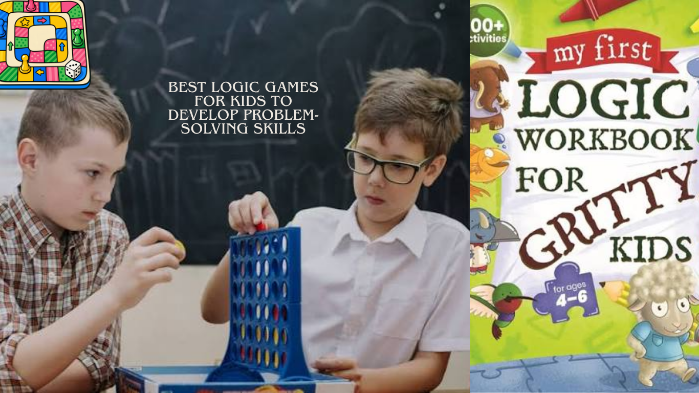
Connect Four is quick, colourful and easy to learn. Players drop discs into a grid and try to line up four in a row. It sounds basic, but it quietly teaches kids to block an opponent while building their own plan.
It’s good for ages 6 and up, and the games are short enough that a loss doesn’t feel too heavy. Kids can play again straight away and try a different strategy.
10. Riddles and Brain Teasers
Riddles are logic in disguise. A good one forces a child to think about the question from an unusual angle. For example: “What has hands but can’t clap?” (A clock.)
Read a riddle at breakfast or in the car and let everyone guess. Don’t give the answer too quickly. Even wrong guesses are useful, because they show how kids are thinking. Riddles work for almost any age, as long as you choose ones that match their level.
11. Online Logic and Puzzle Games
There are many free websites and apps with logic puzzles, from simple sliding-block games to physics challenges and coding puzzles. They can be a handy way to practise when you’re away from home.
When choosing, look for games with age-appropriate content and few ads, and try them yourself first. Free versions often include advertising, so it’s worth staying nearby for younger children. A time limit of twenty to thirty minutes is a sensible place to start.
12. “Twenty Questions” and Guessing Games
This old favourite needs no equipment at all. One person thinks of an animal, object or character, and the others ask yes-or-no questions to figure out what it is.
It’s a clever way to teach kids to ask good questions. They quickly learn that “Is it an animal?” is more useful than “Is it a dog?” as a first question. That’s a strategic thinking skill, and it makes for great conversation on long drives.
Choosing the Right Game for Your Child’s Age
Every child is different, so use this as a rough guide, not a rule.
Ages 3 to 5: Easy mazes, simple jigsaw puzzles, block building and basic sorting and matching games.
Ages 6 to 8: Kid-friendly sudoku, Connect Four, tangrams, beginner chess and simple riddles.
Ages 9 to 11: Rush Hour, Mastermind, logic grid puzzles and more difficult chess games.
Ages 12 and up: Harder logic puzzles, strategy board games, coding challenges and designing their own puzzles.
If your child is bored, the game is probably too easy. If they’re frustrated and wanting to quit, it’s probably too hard. The sweet spot is a challenge that needs effort, but can be solved with persistence.
How Parents Can Support Problem Solving
Choosing a good game is only part of the picture. How you respond matters just as much.
Resist the urge to give the answer. It’s tempting to jump in when your child struggles, but the struggle is where the learning happens. Try asking, “What have you tried so far?” or “What do you think would happen if you moved this piece?”
Praise effort, not just results. Saying “I love how you kept trying different ideas” encourages persistence far more than “You’re so smart.”
Let them lose sometimes. Don’t always let your child win. Losing teaches resilience, and winning feels much better when it’s earned.
Talk about thinking. After a game, ask, “How did you decide on that move?” Explaining their thinking helps children understand their own strategies.
Make it a routine. A puzzle after dinner, a game on Sunday afternoons or a riddle at breakfast can become a lovely family habit.
A Quick Word on Screen Time
Digital logic games can be useful, but they shouldn’t replace physical play. Hands-on activities like building, drawing and board games give kids a different kind of experience, including talking, negotiating and sharing, which screens can’t fully offer. A healthy mix usually works best.
Final Thoughts
Logic games don’t need to be complicated or expensive. A simple maze, a sudoku grid or a round of Twenty Questions can plant the seeds of strong problem-solving skills. What matters most is that your child enjoys the process and learns that tricky problems can be solved, one step at a time.